What size evaporative cooler do I need?
Choosing the right size evaporative cooler is the single biggest factor in how well your system performs. Too small, and your home never quite feels cool on a 35°C+ day. Too large, and you’re paying for airflow, noise and installation costs you don’t need.
This guide breaks down exactly how evaporative cooler sizing works — in the same litres-per-second (L/s) terms the manufacturers use — so you know roughly what range to expect before you get a professional measure and quote.
How does evaporative cooling work?
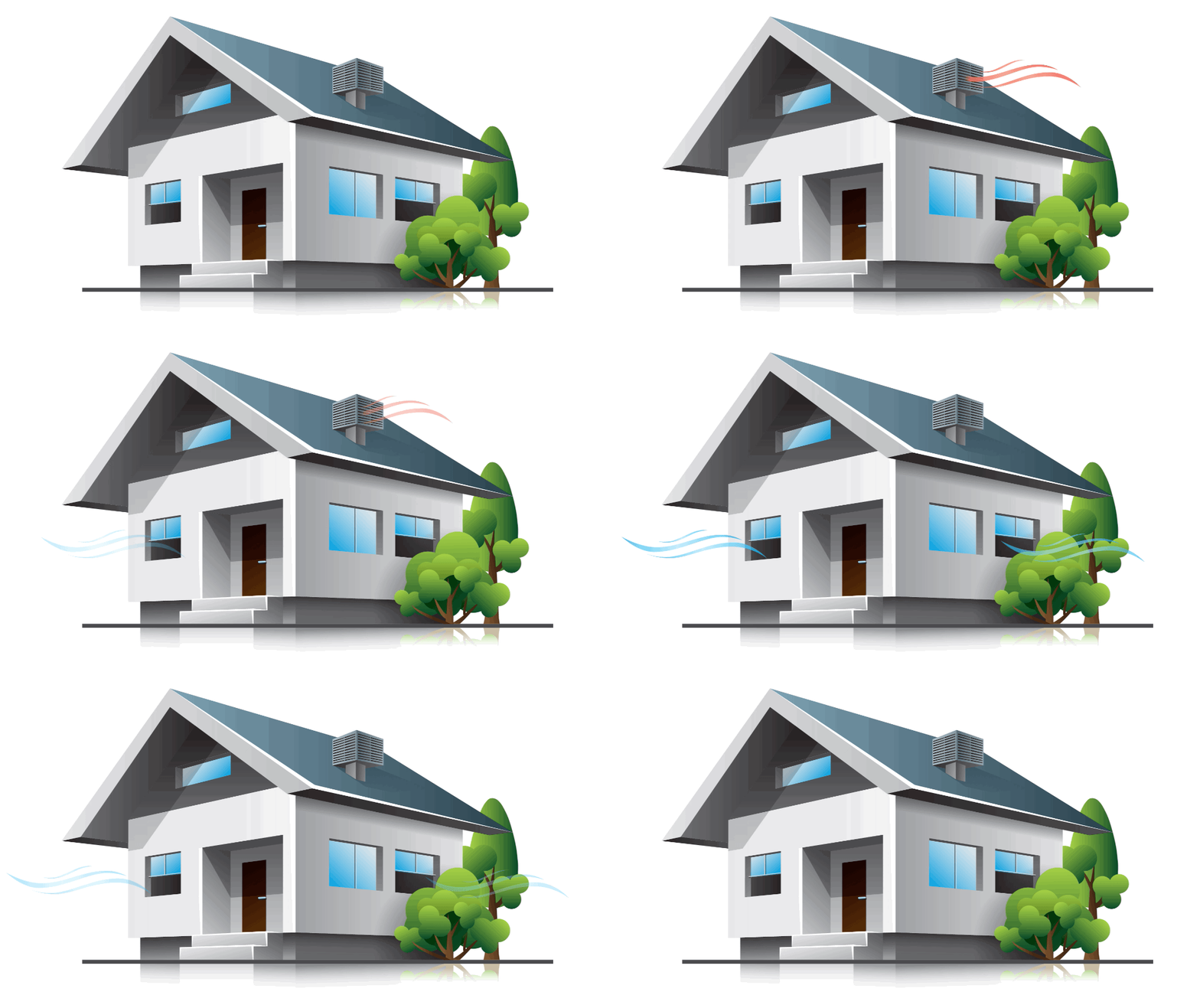
An evaporative cooling system draws hot, dry air from outside through water-soaked cooling pads. As the water evaporates, it pulls heat out of the air. A fan then pushes that cooled, fresh air through your ducted system and into every room.
Unlike refrigerated air conditioning, evaporative systems never recycle the same air — every bit of it is fresh from outside. That makes them a popular choice across Adelaide and Melbourne for households who want:
- 100% fresh air circulating through the property, not recirculated air
- Natural humidity that doesn’t dry out skin, eyes or sinuses
- The ability to leave doors and windows open while it runs (in fact, it needs to — more on that below)
- No CFCs or HFCs, and a smaller environmental footprint than refrigerated systems
Evaporative cooling performs best in dry climates with low humidity — which is exactly why it’s so widely used in South Australia and Victoria, and less suited to humid coastal regions.
Why size is measured in litres per second (L/s), not just “room size”
Split system air conditioners are usually sized in kW. Ducted evaporative coolers are different — because the whole point is moving a large volume of fresh air through your entire home, sizing is based on airflow, measured in litres per second (L/s).
The industry rule of thumb: a correctly sized system should be able to replace the entire volume of air in your home roughly every 2–3 minutes. That means the calculation isn’t just floor area — it factors in:
- Floor area (m²)
- Ceiling height — raked or high ceilings need noticeably more airflow than a standard 2.4m ceiling
- Number of open-plan living areas vs. closed-off rooms
- Duct run length and layout
- Climate zone and humidity — Adelaide’s dry summers get more out of a given unit than a more humid location
- Insulation quality — poorly insulated homes gain heat faster and need more airflow to keep up
That’s why two houses of exactly the same floor area can end up needing different-sized units.
Rough sizing guide by home size
Use this as a starting indication only — it’s based on an average home with standard 2.4m ceilings. Your actual recommendation will depend on the factors above, which is why we always do a free in-home measure before quoting.
| Home size (approx.) | Typical airflow needed | Example unit tier |
|---|---|---|
| Small unit / apartment (up to ~100m²) | ~1,500–2,000 L/s | Entry-level ducted models |
| Standard 3-bedroom home (~120–160m²) | ~2,000–2,500 L/s | Mid-range models, e.g. Breezair Icon (2,540 L/s) |
| Larger family home (~160–220m²) | ~2,500–2,900 L/s | High-capacity models, e.g. Breezair Extraordinaire (2,100–2,900 L/s) |
| Large open-plan home or high ceilings (220m²+) | 2,900 L/s+, sometimes two systems | Premium/dual-system setup |
Airflow figures for Breezair models sourced from manufacturer specifications. Actual requirements vary with ceiling height, duct layout, climate and insulation — a measure and quote from one of our technicians will confirm the right fit for your property.
What size evaporative cooler do I need for a 3-bedroom house?
For a standard single-storey, 3-bedroom home with 2.4m ceilings, most Adelaide and Melbourne properties sit in the 2,000–2,500 L/s range. Homes with an open-plan kitchen/living area, raked ceilings, or a second storey typically need to size up from there.
Does an inverter model make a difference?
Yes. Even within the same airflow tier, models with inverter technology can reduce running costs by up to 50% compared to non-inverter equivalents, because the fan motor modulates speed instead of running at full power constantly. If running costs matter to you as much as upfront price, it’s worth asking about inverter options when you get your quote.
Do I need to leave windows or doors open?
Yes — evaporative cooling relies on air being able to escape the house as fast as it’s pumped in. Leaving a few windows or doors slightly open (opposite the areas being cooled) lets warm, stale air exhaust out, which is what keeps the system running efficiently. This is a good detail to check during your in-home assessment, since duct placement affects how much natural cross-ventilation you’ll get.
Evaporative cooling vs. reverse cycle: does size work the same way?
No — reverse cycle (refrigerated) systems are sized in kW of cooling capacity and work differently, since they recirculate and cool the same air rather than pushing fresh air through. If you’re still deciding between the two, our team can walk you through both options based on your home’s layout, insulation and budget — see our full range of air conditioning options.
Get the right size
Manufacturer specs and rough guides like the table above are a useful starting point — but the only way to know your exact number is to have a professional measure your home. Ceiling height, duct runs, orientation and insulation all shift the final figure, and getting it wrong in either direction costs you comfort or money.
Rite Price Heating & Cooling has been sizing and installing evaporative cooling systems across Adelaide and Melbourne for over 20 years, with Breezair, Braemar and Coolair among the brands we install. Book a free in-home measure and quote, and we’ll tell you exactly what size your home needs — no guesswork.